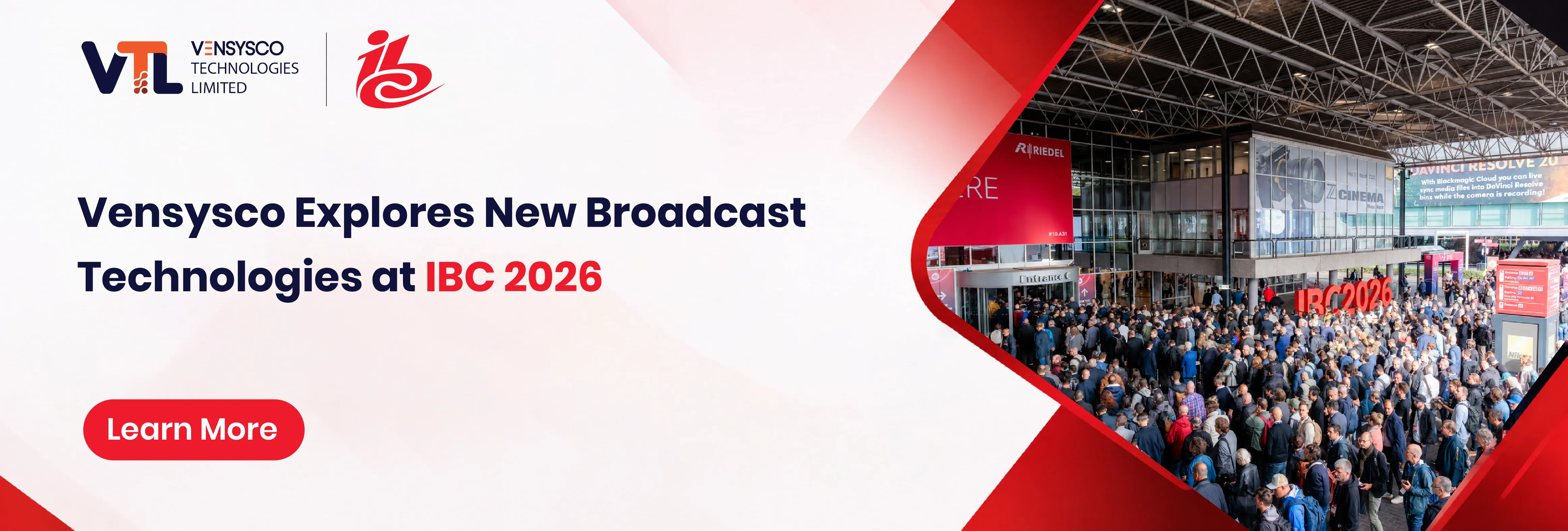
Vensysco Explores New Broadcast Technologies at IBC 2026
23-10-2026
The IBC 2026 Experience
The media and broadcast landscape is evolving quickly. Technology is transforming the way content is created, shared, and consumed, whether on live television, sports, OTT, or digital newsrooms. Professionals and technology suppliers from all over the world's media and entertainment industry gathered at IBC 2026 in RAI Amsterdam, the Netherlands, to discuss these developments.
Events like IBC can help companies in all sectors of broadcasting, streaming, and digital infrastructure get an insight into the direction of the industry. They provide a space to discuss concepts, to brainstorm solutions, and to explore how new technologies may be applied to address real-world issues for broadcasters and media organizations.
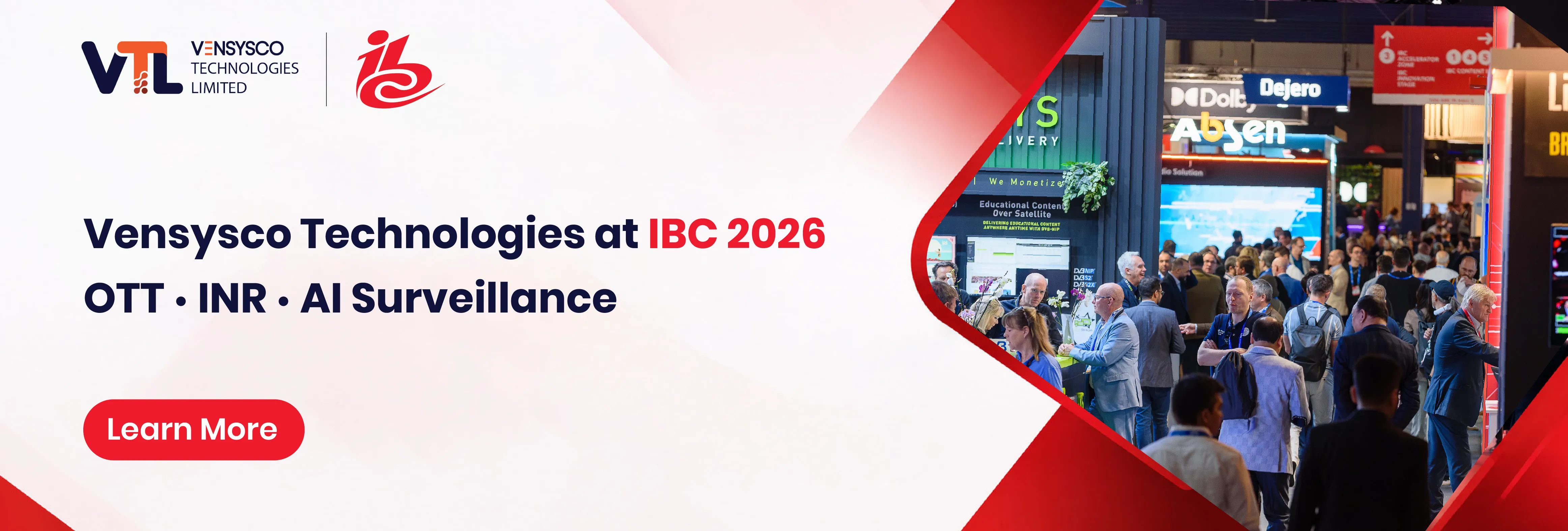
Vensysco Showcases Innovation at IBC 2026
At IBC 2026, Ashish Dubey presented Vensysco Technologies to the Original Equipment Manufacturers (OEMs) and technology providers from the broadcast and media sector. They covered everything from broadcast infrastructure and cloud-based media workflows to OTT platforms and AI-powered content discovery and live streaming. These conversations gave further insight into the evolving tools and methodologies to enhance media operations flexibility, reliability, and efficiency. These interactions play an essential role in Vensysco's knowledge of the changing needs of customers. They also support the company in assessing technologies for use in products/services currently on offer as well as assist in the development of new services. The discussions weren't about individual products, but about the industry's requirements for connecting a variety of technologies to support existing business and future growth.
Key Technologies in Focus at IBC
1. Broadcast and Media Automation
Several systems are required to operate together for broadcast operations, with tight deadlines. Even minor delays in the operation can impact the viewing experience, whether it's in the preparation of programmes for transmission or in coordinating live production.
The technology areas discussed included broadcast playout and studio automation, master control room operations and integrated newsroom workflows. For organizations with significant amounts of content, live production tools, replay systems, graphics, and media asset management are also critical.
Improved workflows can help broadcasters to manage their productions, reduce repetitive manual work, and organize their teams more effectively. These improvements can assist sports broadcasters and newsrooms in meeting changing demands and ensure consistent production.
2. OTT Platforms and Live Streaming
Content is becoming more and more device, location, and viewing format agnostic. To meet these expectations, streaming infrastructure must be able to adapt to varying audience demand without sacrificing playback quality.
The use of flexible distribution models was highlighted in discussions on live streaming, low-latency video delivery, cloud playout, and Free Ad-Supported Streaming TV (FAST) channels. Streaming quality monitoring and audience analytics are also beneficial, enabling media teams to pinpoint playback problems and grasp viewing habits.
These features apply to any broadcaster looking to grow their digital footprint, OTT operators with increasing audiences, and any organization interested in broadcasting live events to audiences in various locations.
3. AI-Powered Media Intelligence
Media companies generate and retain vast quantities of video on a daily basis. When archives are not easily searchable, it can take a long time to find the specific interview to locate a significant moment in a match or to find footage from an older broadcast.
Video understanding and automated metadata generation can help make this process more manageable. Key-moment detection, sports highlight generation, content recommendations and archive search tools can assist teams in finding relevant content without having to manually watch hours of footage.
The benefits of the feature for broadcasters and content owners include allowing them to reuse existing archives, making content for various platforms, and making footage more accessible.
4. Cloud Infrastructure and Content Security
When media workflows are distributed, control of production, storage, and delivery is possible with cloud infrastructure. With remote teams and scalable resources, organizations can collaborate across locations, and the remote team can be scaled up or down as needs dictate.
Flexibility must be, however, accompanied by security. Content protection, digital rights management (DRM), access controls and anti-piracy measures are still vital to safeguarding valuable media assets. Cloud storage, secure distribution and remote collaboration were thus of interest, especially for organisations with a large content library and who must distribute content to various platforms.
Meaningful Industry Connections
IBC was a chance to discuss various solutions to challenges in broadcasting, streaming, production and content management. Some of the companies and technology areas that were relevant to these discussions were:
Ant Media: Low-latency live streaming and real-time video delivery.
Google Cloud: Cloud infrastructure, data services and AI capabilities.
Kaltura: OTT platforms and cloud TV solutions.
Amagi: Cloud broadcasting, playout and FAST channel management.
TwelveLabs and Media Distillery: Video understanding, content analysis and intelligent media discovery.
NPAW: Streaming analytics and quality of experience monitoring.
Ateme: Video encoding, compression and delivery.
The EVS: Live production, replay and sports broadcasting workflows.
Ross Video and Avid: Production systems, graphics and media management.
Riedel: Production communications and media networking.
Nagra: Content protection and digital rights management.
These are areas of technology interest and not partnerships or finalized agreements. A broader ecosystem analysis can help to understand how individual capacities might be integrated into a larger media workflow and where additional technical assessment might be warranted.
Emerging Opportunities and Applications
The technologies that are being discussed at IBC are relevant to many aspects of the media industry.
Integrated newsroom systems and cloud-based production tools can streamline content coordination and distribution for live news.
Replay systems, automated highlights and video search can assist production teams in sports broadcasting to identify key moments and create content for various platforms.
Scalability of streaming infrastructure, improved playback monitoring, and flexible distribution options for OTT providers. Regional broadcasters can also capitalize on other audiences across the region through digital platforms and more efficient content distribution.
Another interesting aspect is the use of AI for archive management. It would also help people search and organise footage more easily, potentially allowing media outlets to access their content libraries more efficiently.
Future Sports Broadcasting requirements, including those for the Commonwealth Games 2030, can also be used to guide the industry's evolving infrastructure and delivery requirements. These are areas of potential interest, not confirmed Vensysco projects or commitments
What IBC 2026 Means for Vensysco
By interacting with industry, Vensysco can keep up with evolving technology needs and assess strategies that could be applicable to its customers. It also offers a wider perspective on the growing integration of broadcasting and cloud infrastructure, streaming and content management.
Choosing a single technology is not the challenge for media companies. Systems need to work together, content needs to move from platform to platform, and security and performance need to be addressed as they change over time to ensure reliability.
Vensysco’s know the best knowledge and information about the streaming solutions, cloud infrastructure and AI and digital integration aligns with the industry needs. We help companies develop sustainable infrastructure and connected media workflows for more testing of the technologies.
Conclusion
IBC 2026 was a great opportunity to exchange ideas, information and insights about new technologies and the challenges that will shape the future of broadcast and digital. The discussions highlighted the need for resilient infrastructure, adaptable content delivery, streamlined production processes, and safe media management. Collaboration and technology assessment will continue to be crucial as the industry evolves to find solutions that are relevant to actual operational requirements. Vensysco Technologies will continue to pursue opportunities in broadcasting, streaming and digital infrastructure with a focus on tangible solutions that meet the evolving needs of media companies.
Vensysco's services are designed to help shape a media landscape focused on secure delivery, streamlined workflows, and future expansion.




Ready to secure your next examination?
Contact Vensysco today to learn how AI surveillance can safeguard your assessments.
Schedule a Demo