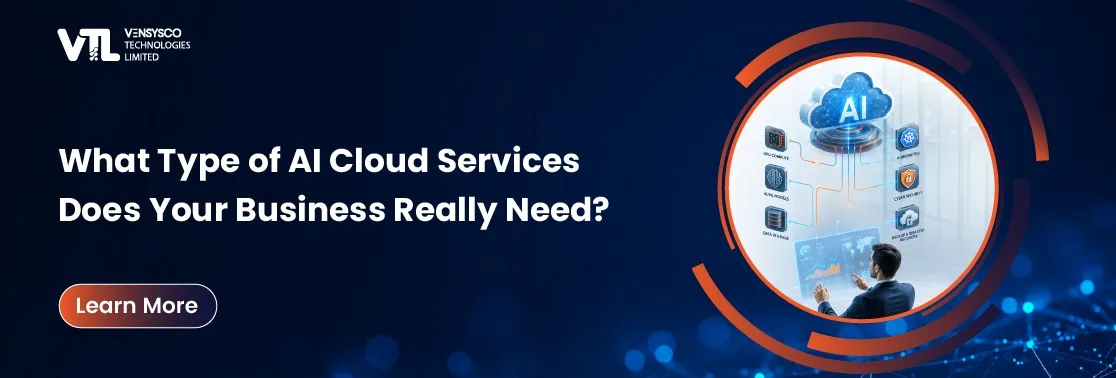
What Type of AI Cloud Service Does Your Business Really Need?
14-07-2026
Every business has some kind of cloud technology today, but very few think about whether the cloud technology suits their needs or not. This is where the concept of AI in Cloud Services comes in. It combines AI in cloud computing technology and helps businesses in automating processes and making decisions.
In general, cloud services are the way through which businesses use computing resources, storage, and software over the internet without physically possessing the same. With AI becoming an integral part of each and every aspect of a business, having an understanding of various AI cloud computing models has become a necessity.
Different AI cloud computing models exist because no two businesses have the same infrastructure needs or growth patterns. Comparing AI cloud computing models side by side makes it easier to match the right setup to your budget, compliance, and scalability requirements.
In this guide, we will discuss what AI Cloud Services are, various AI cloud computing deployment models and AI in cloud computing service models, current usage by enterprises, and how to choose the right cloud service for your business.
What Are AI Cloud Services, and Why Does It Matter?
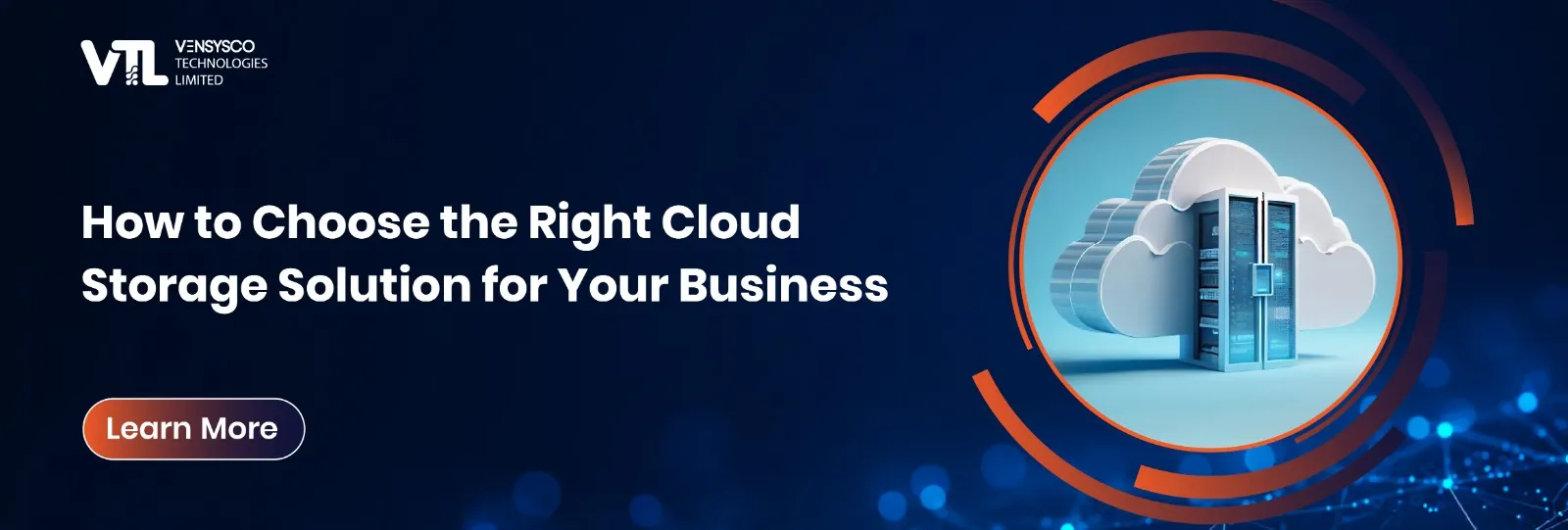
AI Cloud represents a cloud environment designed for carrying out artificial intelligence activities such as machine learning models training or data analysis in real time without the need for costly hardware investments on the part of business organizations.
Basically, artificial intelligence within AI cloud computing involves not just storing and processing data but actually helping interpret it. All predictive analytics, automation workflows, and intelligent customer service functions are enabled by this integration.
Typical characteristics of AI Cloud Services usually include:
High-performance computing access on demand (including GPU support for AI workloads)
Machine learning capabilities and pre-trained models
Automated scaling according to demand
Data analytics and reporting
The point here for business organizations is obvious – accelerated innovation at no initial investment.
Classifications of Cloud Services
Cloud deployment models decide where your data and applications physically reside and who has access to them. Businesses handling sensitive information often evaluate cloud deployment models more carefully than service models, since compliance risk starts at the infrastructure layer. Besides AI capabilities, every cloud solution begins with an even more fundamental decision – where will your infrastructure be located? Cloud deployment models help answer this question.
Public Cloud
A public cloud is a piece of infrastructure controlled by a third-party provider such as Amazon Web Services (AWS), Microsoft Azure, and Google Cloud and shared among different businesses.
Advantages: Minimal initial investments, fast deployment, and almost limitless scalability.
Applicable to: Startups, seasonal businesses, and companies with irregular or quickly growing workload.
Private Cloud
A private cloud is a dedicated infrastructure that is used exclusively by one company and hosted on-premise or by a service provider.
Security benefits: More control over data, simpler compliance regulation, and less exposure to the risks of shared tenants.
Applicable industries: Financial services, banking, government, healthcare industry and educational institutions working with confidential information about students or citizens.
Hybrid Cloud
A hybrid cloud utilizes both public and private infrastructure, allowing businesses to retain the private nature of some workloads and leverage public cloud to scale.
Ability: Enterprises can operate with daily business on private infrastructure and scale to the public cloud when necessary.
Business applications: The majority of large enterprises
Cloud Service Models Explained
Cloud service models determine how much control your team keeps versus how much the provider manages on your behalf. Picking among the cloud service models available - IaaS, PaaS, or SaaS - largely depends on your in-house technical capacity. After you decide on your deployment model, the second question is determining which cloud service model corresponds with your team’s needs.
Infrastructure as a Service (IaaS)
IaaS offers basic computing resources such as servers, storage, and network components whereas all layers higher up belong under your team's control.
Examples: Organizations who use their own developed software and require total control over their environment.
Go for IaaS in case: You are looking for maximum freedom and already have staff to run applications.
Platform as a Service (PaaS)
PaaS includes an out-of-the-box development environment that enables teams to build and deploy applications with no need for server and operating system management.
Examples: Development teams working on a new application designed to work with customers.
Opt for PaaS when: Your key priority is shorter development cycles.
Software as a Service (SaaS)
SaaS represents fully deployed applications delivered via the Internet including e-mail, CRM, HR management and other applications.
Examples: Businesses that use accounting or payroll software available in the cloud.
Select SaaS when: You are after immediate solutions and do not need to install anything.
How Contemporary Enterprises Are Using AI Cloud Services
These days, modern organizations are not utilizing the technology in isolation but are integrating AI Cloud Services into all aspects of their businesses:
Automation: Tasks such as processing invoices and handling IT tickets are done with little human intervention.
Data analysis: Organizations analyze data in real time to make better decisions.
Security: Threats are detected through automated threat detection technology.
Customer service: Organizations use chatbots and voicebots to answer customer queries.
Distributed workforce capabilities: Cloud applications allow workers to collaborate from anywhere.
Cost savings: Usage monitoring through AI allows companies to prevent wastage of money on unused services.
Cloud applications have replaced traditional installed software for everything from accounting to customer support. Because cloud applications update automatically and run from anywhere, businesses spend less time on maintenance and more time on actual work.
Benefits and Challenges of AI Cloud Adoption
Like any paradigm change in technology, implementing AI Cloud has some definite pros and cons.
Pros:
Decreased costs for IT infrastructure
Scalability in cases of peak demand
Increased productivity of employees via automation
Higher security using AI monitoring
Innovation and development of products on an increased pace
Cons:
Issues regarding privacy of data
Different compliance regulations
Compatibility problems with legacy systems
Difficulty of migration for big corporations
So, What Type Of Cloud Service Does Your Business Really Need?
There isn't really a "one size fits all" solution, but there are some guiding questions that can help:
Dealing with sensitive or controlled data? Private or hybrid cloud should be your choice.
Scaling unpredictably or seasonally? A public cloud will give you maximum flexibility.
Have a dedicated IT staff? Then IaaS or PaaS is the way to go.
Need something ready-to-use right now? SaaS is going to be quicker.
Most companies don't just pick one of these options, however; they use a mixture of them, depending on the specific requirements of different departments.
Why Businesses Choose Vensysco Technologies Limited
Enterprise cloud solutions are built to handle the scale, compliance, and integration demands that smaller cloud setups aren't designed for. Businesses adopting enterprise cloud solutions typically prioritize uptime guarantees and dedicated support over lowest-cost pricing. Businesses that are not sure how to proceed can find making decisions on enterprise cloud solutions much simpler by working with a well-experienced partner. This is how Vensysco Technologies Limited can assist enterprises from various industries make such decisions through:
Cloud consultation based on the unique needs of your industry
AI-driven cloud solutions based on business cases
Seamless cloud migration
Cloud management solutions that ensure high performance and safety
Transformation to cloud-supported digital business at all stages of development
Instead of offering a general cloud solution to each client, Vensysco Technologies Limited will help clients choose the suitable deployment and service model.
Final Thoughts
The choice of cloud doesn’t lie in choosing the cloud which is trending; instead, it lies in finding the one which matches your own business infrastructure. This could be anything from public to private cloud services or even hybrid cloud depending upon your data sensitivity, scalability, and internal IT capabilities.
With AI Cloud Services being the key differentiator between organizations in today’s world, the organizations which take an informed decision and not go by the trend will be the ones which will scale ahead and spend wisely. Partnering with a company such as Vensysco Technologies Limited will certainly ease out the process.
Willing to learn how we can assist you? Contact us now.
Frequently Asked Questions (FAQs)
What is an AI Cloud, and how does it differ from ordinary clouds?
AI Cloud merges the standard cloud architecture with integrated Artificial Intelligence (AI) and Machine Learning, enabling organizations to operate intelligent services without owning special hardware.
What are the three primary models of cloud services?
The three main models are IaaS (Infrastructure as a Service), PaaS (Platform as a Service), and SaaS (Software as a Service).
Which model of cloud deployment suits enterprises the most?
Hybrid cloud suits most enterprises as it takes advantage of the flexibility of public cloud and the security of private cloud at once.
How can Vensysco Technologies Limited help to deploy an AI cloud?
Vensysco Technologies Limited can offer you cloud consulting, cloud migrations, and managed cloud services according to your compliance needs and business objectives.
What are the advantages of AI Cloud for businesses?
AI Cloud Services help to reduce IT expenses, ensure scalability, increase security, and accelerate innovation by leveraging automation and real-time analytics.

Ready to secure your next examination?
Contact Vensysco today to learn how AI surveillance can safeguard your assessments.
Schedule a Demo