Cloud Engineering Services
Cloud Engineering Services for Enterprise Infrastructure Scale
The modern enterprise ecosystem is defined by real-time responsiveness, elastic scalability, and stringent regulatory compliance requirements. The previous infrastructure paradigms (manual provisioning, tightly coupled deployment architectures, and fragmented networking layers lacking programmability) a Services' re fundamentally misaligned with the evolving demands of modern enterprises/methodologies. These architectures create systemic inefficiencies as well as limit an organisation’s ability to be operationally agile and increase the organisation’s exposure to risk (performance & security).
As organisations move to a distributed approach to systems or work with data-intensive workloads, the use of static (non-cloud) or traditional virtualisation-based environments lacking cloud-native abstraction layers will become a structural impediment. The architectures of these legacy systems are not capable of supporting the application requirements of today, such as high-throughput data pipelines, intelligent workloads, or globally proximate services (zero-latency business interactions).
Cloud engineering services can fill that void by providing the ability to build adaptive, automated, and continuously developing infrastructure ecosystems. enabling organisations to implement a comprehensive enterprise cloud solution tailored for large-scale, distributed, and regulated environments. These ecosystems will be developed to deliver on dynamic workloads, provide operational resiliency, and maintain consistent high performance regardless of the fluctuations present.


Platform Driven Cloud Engineering and Infrastructure Automation
A platform-based approach at the core of Cloud Engineering leads to an Infrastructure approach that breaks the traditional idea of being an assortment of independent parts; instead, it provides an ecosystem where infrastructure is standardised, version-controlled, and managed as a single system. This approach aligns with modern platform engineering practices, where internal developer platforms standardise infrastructure provisioning, governance, and lifecycle management at scale.
This shift to a platform-based approach will create consistency, repeatability, and governance throughout the entire life cycle of the infrastructure. This includes advanced networking configurations, service mesh integration, and load balancing mechanisms to ensure efficient traffic distribution and high availability. Infrastructure as Code (IaC), implemented through tools such as Terraform, creates the foundation for this new model by changing how we provision and configure infrastructures to a programmatic model, thereby allowing for deterministic deployments and consistent environments, and allowing for tracked/traceable changes to the infrastructure.
Additionally, immutability of infrastructure can be further developed by using a replace rather than modifying in place strategy so that we can eliminate configuration drift and greatly reduce our chances of inconsistencies between multiple environments. Taking the time to develop this new infrastructure approach using automated pipeline builds and deployments allows us to be able to use continuous delivery with our infrastructure with very minimal, if any, manual processes.
Cloud Native Application Engineering with Containers and Kubernetes
The cloud engineering services extend beyond the infrastructure and provide a way to enable organisations to create cloud-native applications. Transitioning from a monolithic architecture to a microservices-based architecture allows for the separation of applications into smaller, more loosely coupled and independently deployable components.
With containerization, the environment in which an application runs is 100 per cent consistent from development through production, meaning it is not only portable but also there will always be less of a difference between each environment. Kubernetes is a type of orchestration tool used to manage the deployment of containers as well as provide capabilities like automated deployment, horizontal scaling and self-healing, making sure your applications are available whenever needed and using up resources efficiently. These orchestration capabilities also enable auto scaling, load-balanced traffic routing, and intelligent workload distribution across clusters.
With the use of sophisticated deployment strategies (blue-green and canary), the ability to slowly deploy new systems or changes to existing systems further strengthens the reliability of a system by allowing controlled rollouts that minimise disruption when updating systems.

DevOps Pipelines, Security and Policy-Driven Governance Models
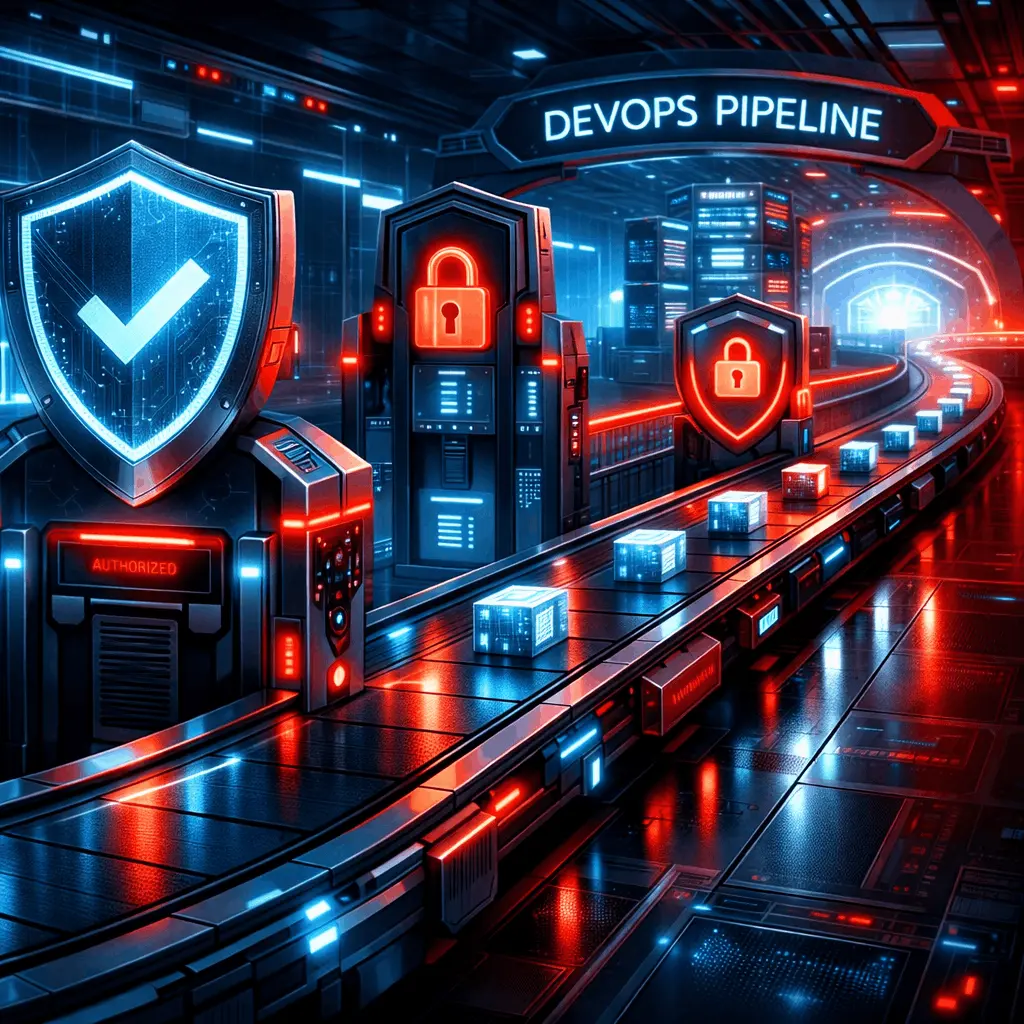
The key function of cloud engineering is the combination of DevOps best practices with security and governance models. Today’s pipelines automate the process of building, testing and deploying with validation and compliance checks performed at each step along the way.
Defining and enforcing governance rules through the use of policy as code allows businesses to programmatically adhere to regulatory and organisational standards. There are secret management mechanisms to protect sensitive data from disclosure, along with the use of automated validation to minimise human error.
The integration of automation, security, and governance creates an environment that is both highly controlled and agile, which will support enterprise-level requirements.
Observability and Telemetry for Real-Time System Visibility
In cloud engineering, observability serves as a foundational competence providing in-depth visibility into the operation of distributed systems. Traditional monitoring primarily monitors pre-established metrics; however, observability aggregates logs, metrics, and traces to facilitate an overall perspective regarding the performance of a particular system.
The advantages of using an observable system include its ability to detect anomalies before they occur, perform root cause analysis when there is an anomaly, and optimise system performance as soon as there is an opportunity to do so. In addition, observability allows for capacity planning and resiliency engineering by providing valuable insight into the workload characteristics and dependencies of the various systems interacting with each other. supporting reliability engineering practices through proactive system diagnostics and performance optimisation.


Multi Cloud Hybrid Architecture and Edge Computing Integration
The cloud engineering services are principally centred around developing a multi-cloud or hybrid architecture that provides greater design options and reduces reliance on one supplier. Distributing workloads over multiple environments allows organisations to maximise availability, enhance fault tolerance and achieve vendor independence through a more strategic vendor selection process. Supported by robust cross-cloud networking strategies that ensure secure and low-latency communication between distributed environments.
Extending this architecture is edge computing, where data can be processed much closer to the location of the data's source. The reduced distance from the source of data improves the speed at which data can be processed and sent to the requesting application. This capability is especially important when an application has to perform real-time actions, as is often the case with IoT technologies, intelligent automation platforms, and applications that exist across multiple geographical areas.
Cloud Cost Optimisation Using FinOps and Resource Governance
By implementing FinOps principles that connect cloud costs to business goals, effective cloud engineers create a framework for financial responsibility. Organisations achieve this by constantly reviewing how resources are being used and whether they are being consumed at optimal levels to identify areas of wasted resources and adjust cost models accordingly.
Businesses benefit from the use of right-sizing, scheduling workloads, and removing unused/idle resources to fully use all available capabilities of their cloud resources. Financial and operational goals can be achieved through an effective cloud engineering discipline that balances cost efficiency and performance/scalability, thereby allowing the ability to sustain large-scale use of the cloud.


Zero Trust Security Architecture for Enterprise Cloud Systems
Security within cloud engineering frameworks is increasingly based on Zero Trust principles, where no entity is inherently trusted. Every access request is subject to continuous authentication, authorisation, and contextual validation.
This model significantly reduces the risk of unauthorised access and lateral movement within systems. It is particularly effective in distributed and multi-cloud environments, where traditional perimeter-based security models are no longer sufficient.
Serverless Architecture and Secure Artifact Management Practices
Serverless Computing is like having advanced cloud computation technology by providing you with a way to remove the need to manage physical servers. Serverless also provides you with a method for executing code via events (event-driven execution). The benefit of serverless is that it will scale up and down automatically based on usage, which increases both the efficiency of the operation and the price of the service. These systems inherently support dynamic auto scaling, allowing compute resources to adjust in real time based on workload demand.
Artifact Registry and Artifact Management Systems assist in preserving the integrity of an overall software program by validating and securing each software component prior to adding it into production. Consequently, Artifact Management contributes to improving the software supply chain's integrity and reducing the amount of potential exposure to vulnerabilities.


Structured Cloud Migration Strategies for Legacy Modernisation
Cloud engineering services also encompass structured migration strategies that enable organisations to transition from legacy systems to modern architectures with minimal disruption. Depending on the complexity and requirements, approaches such as rehosting, replatforming, and refactoring are employed.
Using a phased approach for migrating to the cloud will allow organisations to maintain ongoing operations during their transformation process. In addition to ensuring that there is no impact on the stability of the organisation's current systems or applications, a phased migration also helps eliminate any associated risk and provides organisations with the opportunity to experience the benefits of cloud transformation.
Enterprise Implementation Perspective by Vensysco Technologies Limited
As part of the larger domain of cloud engineering, Vensysco Technologies Limited (VTL) applies these tenets using a platform-centric, automation-first methodology. This means that VTL's focus is on standardising infrastructure, utilising Infrastructure as Code and through the use of integrated DevOps pipelines, in order to ultimately allow for scalable and controlled cloud environments.
VTL has had extensive knowledge and experience working with scale-driven and regulatory compliance-based customers in both government and enterprise environments, which provides real-world expertise in creating, operating and supporting distributed systems, implementing multi-cloud architectures and creating and maintaining high-availability infrastructures. These experiences allow VTL to operate as an execution-focused partner within the larger enterprise cloud engineering community.

Proven Enterprise Experience Across Government and Large Systems
Enterprise-grade cloud engineering requires not only architectural expertise but also proven execution capability in complex and high-stakes environments. Large-scale deployments, especially within government and regulated industries, must provide high availability and maintain strict compliance while handling large quantities of data.
Achieving consistent success at delivering national-level infrastructures or integrating complex systems while executing within the context of a challenging workload demonstrates a greater engineering maturity and operational reliability in this field than through other means.