Enterprise Cloud Solutions
Taking India to the Cloud 9 with AWS, Google Cloud and Azure
Enterprise Cloud Solutions for Scalable Business Growth
Businesses are meant to scale rapidly. A business may start as a small entity, but within a short period of time, it may have thousands of users, large volumes of data, and numerous digital services operating simultaneously. Therefore, for a business to achieve such growth, it requires robust technology. At this point, Cloud Solutions become essential.
Currently, business organisations are able to run their applications, store their data, and manage their services using powerful cloud technology, as opposed to depending solely on their local servers. With the support of cloud technology, business organisations are able to grow smoothly without any fear of limitations in computing resources, storage or security.
Understanding Enterprise Cloud Infrastructure
Companies need cloud infrastructure to run their digital systems at enterprise scale. This is achieved through computing, storage, networking, and software services provided by a public cloud vendor.
Public cloud solutions allow the company to scale its resources up or down as needed, unlike legacy IT solutions. When the number of Clients or the amount of data increases rapidly, the company can rapidly scale its resources through the cloud.
The ability for an organisation to scale up its infrastructure as needed allows it to support increasing demand with little or no change to its existing infrastructure. Organisations are able to introduce new products, deliver customer service improvements, and increase capacity without requiring extensive application development or infrastructure upgrades.
By providing IaaS cloud service, PaaS cloud platform, and SaaS cloud platform capabilities, organisations are able to leverage the best of these services and create a complete digital ecosystem that will meet the needs of every organisation involved. Each of these types of service provides some level of control over how customers implement their solutions.


Why Scalability is Critical for Modern Enterprises
One of the biggest advantages of cloud technology is scalability. Traditional IT systems require companies to invest in costly hardware infrastructure in advance. If the company grows quickly, that infrastructure may become insufficient.
Challenges are addressed in cloud systems through scalability solutions. An enterprise can expand computing power, storage capacity, or network infrastructure at any time when the need arises.
Workload cloud management allows an enterprise to distribute workloads over various servers for smooth operation. On the other hand, enterprise cloud performance optimisation allows businesses to enhance the speed of their cloud system.
Large businesses often have extensive regions and markets that need to be served. Through the distributed cloud system and edge cloud computing, businesses are able to deliver services to customers with minimal latency.
Hybrid and Multi-Cloud Strategies for Flexibility
Many enterprises do not depend solely on a single cloud provider. Instead, they build flexible environments using hybrid cloud solutions for organisations and multi-cloud strategy approaches. A hybrid cloud combines private systems with public cloud services. A private cloud infrastructure can host sensitive organisational data, while public cloud platforms can run large-scale applications.
Using a multi-cloud strategy allows companies to use services from different enterprise IaaS cloud providers. This improves reliability and prevents dependency on one platform.
To manage these complex environments, organisations use orchestration tools, container cloud platforms, and Kubernetes cloud deployment systems. These tools help automate operations, manage containers, and coordinate workloads across multiple cloud environments.


Security and Compliance in Enterprise Cloud
Security is one of the primary concerns that companies face when they migrate to the cloud. Business systems deal with sensitive information such as customer information, financial information, and business operations.
In modern cloud hosting systems, advanced security systems are used to safeguard sensitive information.
Organisations use cloud governance and compliance systems to ensure that their systems are compliant with industry regulations and standards.
Disaster recovery and backup systems are also available in the cloud. These systems help in the restoration of information in case of any failure in the systems. This helps businesses prevent potential data loss in case of system failure.
Enterprise Cloud for Data, AI, and High-Performance Computing
Therefore, as businesses continue to generate increasing volumes of data, it is essential to manage this data. Cloud computing has provided businesses with effective data platforms as well as storage solutions. Cloud computing is capable of handling massive data volumes.
As AI and advanced analytics are becoming increasingly popular, businesses also require effective computing systems. AI cloud computing, as well as HPC systems, is used for training AI and performing data analysis.
One of the ways in which businesses are benefiting from cloud computing is by using cloud analytics platforms. This is used to transform raw data into actionable insights, enabling businesses to make better decisions as well as understand their customers.

Cloud Automation and DevOps Integration
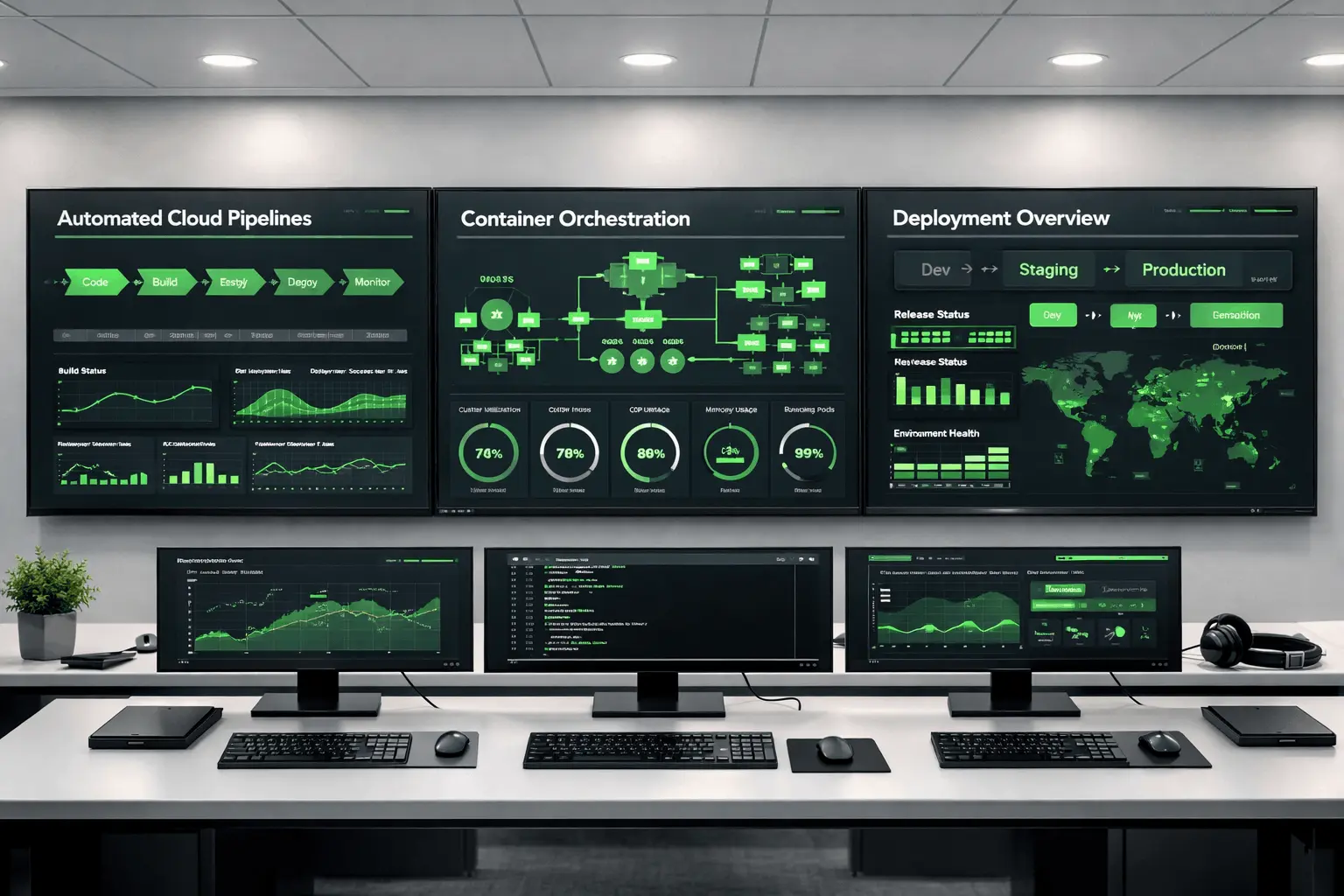
Technology has evolved over the years, with modern technology being based on the concept of automation. Cloud computing has provided various tools that reduce manual intervention.
Automation tools in cloud computing enable organisations to automate the deployment of applications, resources, and infrastructure. This minimises human error in the management of systems.
Companies can integrate cloud computing with application development using DevOps platforms. This enables developers to easily develop applications while maintaining system stability.
Using cloud integration services, companies can integrate various applications, data systems, and services into one system.
Supporting Enterprise Digital Transformation
Another technology that is of significant importance in the context of the digital transformation and cloud computing is cloud technology. Many traditional firms are using cloud technology for the purpose of competing in the digital environment.
With the help of the enterprise cloud modernisation strategy, many firms can seamlessly migrate legacy systems and make them compatible with the cloud environment. In this regard, many firms are using the migration services of cloud providers, where they can migrate applications and databases from the local environment to the cloud environment.
While doing this, many firms are using the cloud deployment approach for the purpose of launching the cloud environment, which can support millions of users at scale.

How VTL Supports Enterprise Cloud Innovation
Across the global technology ecosystem, there exist various providers that support organisations in developing enterprise-grade cloud environments. One such provider is Vensysco Technologies Limited, which is also referred to as VTL.
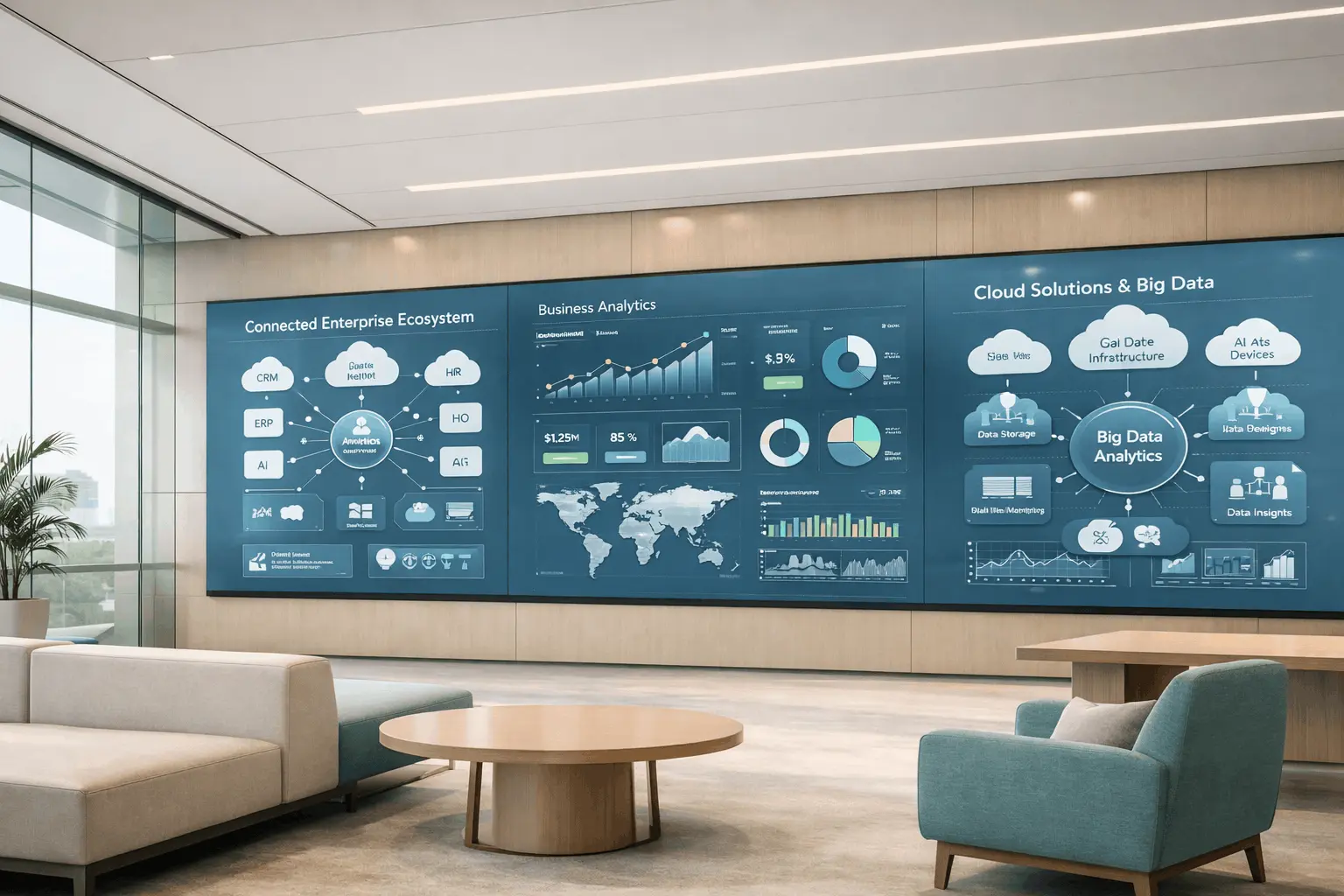
VTL primarily focuses on developing enterprise-grade cloud environments that can support enterprise applications, artificial intelligence systems, and computing environments. The cloud infrastructure developed by VTL enables organisations to deploy modern technologies such as enterprise cloud virtualisation services, high-end enterprise cloud networking architectures, and computing environments that incorporate graphics processing units.
Through the development of high-end cloud integration services, workload management solutions, and cloud optimisation solutions, VTL enables organisations to successfully execute their digital transformation strategies while maintaining high-end computing performance.
Managing Performance and Cost in Enterprise Cloud
However, while these systems offer powerful capabilities, they should be effectively managed to keep them efficient and cost-effective.
Monitoring software is used by companies to monitor their systems and their performance. This helps them to effectively detect issues and resolve them before they affect the users.
On the other hand, cloud cost optimisation software is used to keep track of the resources used and how best to minimise unnecessary expenditure. Proper planning is required to ensure that companies are not forced to pay for unused resources.
Therefore, with effective monitoring and automation strategies, cloud systems are powerful and cost-efficient.


Shaping the Future with Cloud
Cloud technologies play a critical role in modern digital businesses. They offer the infrastructure that enables companies to scale operations efficiently. Cloud technologies offer companies systems that help them expand their operations easily. With cloud platforms, companies can easily leverage powerful data technologies, powerful analytics, and powerful AI computing. This enables companies to easily expand their operations while being flexible. With hybrid cloud environments, powerful security systems, powerful automation, and powerful data technologies, companies can easily expand their operations. As many companies seek cloud modernisation, cloud technologies will help them expand their operations.